
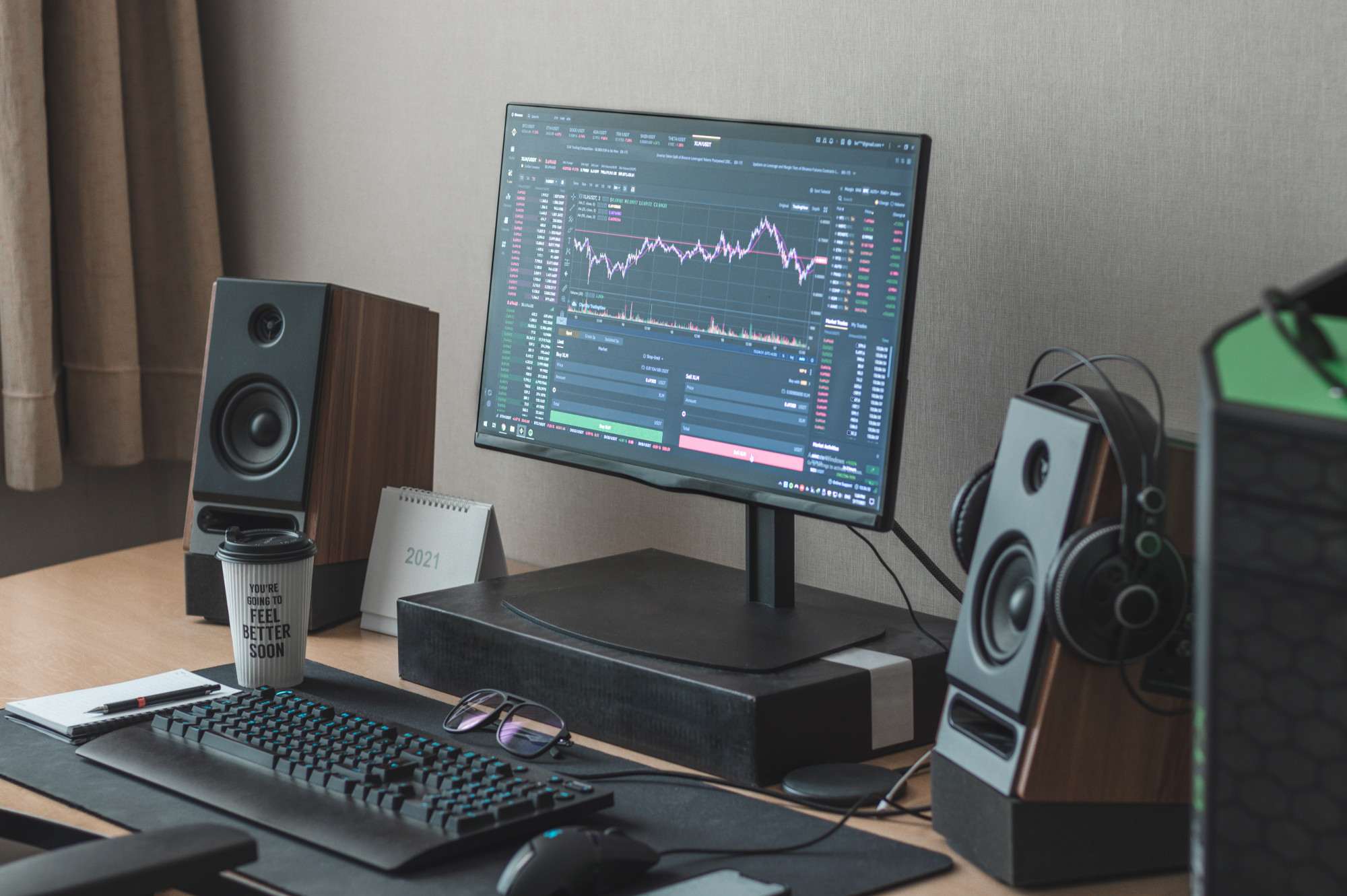
The best platform for swing trading saves you time and stress while helping you maximize returns. It’s what separates the most profitable swing traders from those who struggle to avoid losses. But with so many options at your fingertips, which platform is best for swing trading?
We’ve put together this list of the top solutions on the market right now to help you narrow it down and set yourself up for success. From thinkorswim to Robinhood, TradingView, VectorVest, and more, discover the best stock analysis software for your goals below!
[featured_courses_swing_trading]
What’s the Best Platform for Swing Trading?
Swing trading involves capitalizing on temporary jumps and dips in a stock’s price, which means precision and timing are of the utmost importance. You need to be able to spot opportunities in real time so you can capitalize. That’s why VectorVest is the best swing trading platform.
VectorVest
VectorVest makes your wins bigger and your losses smaller (and more infrequent). It’s a proprietary stock rating system that has outperformed the S&P 500 index by 10x over the past 20 years and counting.
It’s done this while calling every major market move, from the Dot Com Bubble to the Covid Crash. Investors using VectorVest have been able to stay ahead of the curve, protecting their portfolio before downturns and then buying stocks at a discount before corrections.
The best part is how simple it is to use. You don’t have to spend hours sitting at your desk tracking indicators, following moving averages, or performing time-consuming technical analysis.
Instead, you can learn everything you need to know about a stock in seconds by looking at our three intuitive ratings:
- Relative value (RV): This rating gives you a look at the upside potential for a stock. It analyzes the true value of a stock by taking into account AAA corporate bond rates, risk, and other factors.
- Relative safety (RS): This rating analyzes the risk factors of a stock – taking into account the company’s financial consistency and predictability, debt-to-equity ratio, and business longevity.
- Relative timing (RT): This rating speaks to a stock’s price trend – looking at the direction, dynamics, and magnitude of price activity. It’s calculated day over day, week over week, quarter over quarter, and year over year. This helps you buy stocks that are rising in value and sell before they lose too much value, capturing a profit along the way.
Understanding these ratings is as simple as it gets, too. They sit on a scale of 0.00-2.00 – with 1.00 being the average. Ratings over 1.00 indicate overperformance and vice versa – it’s really that simple.
Based on these three ratings, the system provides you with an overall VST rating for the stock. You can simply pick the stocks with the highest VST rating to win more trades! But you also get a clear buy, sell, or hold recommendations based on these ratings.
Pros
- Clear buy, sell, or hold recommendations based on objective data, not opinion
- Proprietary VST rating system simplifies thousands of data points into one actionable score
- Daily analysis on 16,000+ stocks, not a limited watchlist or curated picks
- Built-in market timing signals that help reduce exposure during major downturns
- Ratings update continuously, helping you stay aligned with real price movement
- Designed to minimize emotional trading by replacing guesswork with rules
- No need to manually track indicators, draw trendlines, or interpret conflicting signals
- Works well for both newer traders and experienced swing traders
- Proven long-term performance against major benchmarks
Cons
- Requires trust in a proprietary system rather than manual analysis
- Less customizable than platforms built purely for technical charting
- Not designed for day trading or ultra-short-term scalping
- Full feature access requires a paid subscription
- Traders who prefer building every indicator by hand may find it too streamlined
Finviz
This stock discovery and market-scanning platform is another one of the top candidates for swing traders who want to find ideas fast.
Speed is the main strength of Finviz. You can screen the entire U.S. market using technical conditions that directly matter to swing trading, such as price relative to the 20-, 50-, or 200-day moving averages, RSI ranges, relative volume, gap size, volatility, and simple chart patterns.
You’ll get results instantaneously, displayed as a grid of charts so you can compare multiple stocks without clicking through separate pages. Finviz also layers in recent news, earnings dates, float data, and basic fundamentals so you can spot catalysts driving short-term moves.
Most swing traders use Finviz at two moments: pre-market to find stocks in play, and after the close to build a watchlist for the next session. It’s not a trading platform and doesn’t try to be one. Think of it as a fast filter that narrows thousands of stocks down to a manageable short list.
It serves its purpose well, but VectorVest does all this while letting you connect to brokerages to execute trades within the platform. That’s ultimately what makes it a better Finviz alternative.
Pros
- One of the fastest technical screeners available
- Filters align well with common swing setups (breakouts, pullbacks, high RVOL)
- Visual heatmaps make sector strength easy to spot
- Snapshot charts allow quick side-by-side comparison
- Very easy to learn and navigate
Cons
- No order execution or position management
- Limited chart customization for detailed analysis
- No backtesting or rule-based strategy tools
- Alerts and real-time data require a paid plan
- Needs another platform for entries, exits, and risk control
TrendSpider
TrendSpider is often called the best platform for swing trading for a very specific type of swing trader – those who base decisions on price structure rather than scanning volume alone.
Its defining feature is automated technical analysis. The platform automatically plots trendlines, support, resistance, and channels using historical price data. It eliminates the subjectivity that comes with drawing levels by hand. Swing traders use TrendSpider to confirm breakouts, identify consolidation ranges, and see how price reacts at key levels across multiple timeframes.
TrendSpider also supports multi-timeframe analysis on a single chart so you can align a daily trend with intraday entries. Alerts can be tied to trendline breaks, indicator conditions, or price levels, which helps traders stay hands-off until a setup triggers.
Be clear, though. It’s not meant to replace a scanner. You’ll just use it to validate and manage technical ideas once you already have a candidate.
Pros
- Automated trendlines reduce charting bias
- Strong multi-timeframe charting tools
- Advanced alerts tied to structure, not just price
- Built-in strategy testing for technical conditions
- Well suited for disciplined, rules-based traders
Cons
- Limited stock discovery compared to Finviz
- No brokerage integration or trade execution
- Interface can feel dense for newer traders
- Subscription pricing is higher than basic charting tools
- Works best alongside a separate screener
Firstrade
Maybe you’re looking for the best platform for swing trading that you can actually execute trades through – it’s hard to beat Firstrade. This commission-free brokerage makes investing and trading brain-dead easy.
Swing traders love it for execution because it supports stocks, ETFs, options, mutual funds, and fixed-income products, all without trading commissions.
It’s definitely on the same level as VectorVest, TradingSpider, or many others on this list when it comes to analysis. But you still get basic charting, order types, and account management features. You can enter and exit swing trades once a setup is already defined elsewhere.
There’s no clutter, advanced scripting, or heavy analytics layered into the interface. You log in, place trades, manage positions, and review account activity. But this requires you to do your analysis elsewhere. Our advice? Use the VectorVest stock advisory paired with the Firstrade brokerage for the best of both worlds!
Pros
- Commission-free trading on stocks, ETFs, and options
- No account minimums
- Straightforward web and mobile platforms
- Supports common order types needed for swing trading
- Clean interface that’s easy to navigate
Cons
- Very limited charting and technical indicators
- No stock screener for swing setups
- No backtesting or strategy tools
- Minimal market analysis features
- Requires external platforms for trade selection and planning
thinkorswim
From a pure analysis perspective, you could make the case TD Ameritrade’s thinkorswim is the best platform for swing trading – especially if you prefer to do things the old-fashioned way and rely on the best indicators for swing trading.
This is the go-to analysis platform for swing traders who want advanced charting, scanning, and order control in one place. Swing traders use thinkorswim to analyze price action, build custom scans, monitor positions, and execute trades with precision.
The platform supports stocks, options, futures, and forex, and offers both desktop and mobile versions. But most of what you do will be on the desktop solution, since charting on the mobile app is a bit of a nightmare. It’s not exactly the best stock app for iPhone users.
One of thinkorswim’s biggest strengths is customization. You can build detailed scans, layer multiple indicators on charts, create alerts, and design conditional orders. You also gain access to paper trading to practice strategies without risking real capital.
The trade-off is complexity. The platform takes time to learn, and newer traders may find the depth overwhelming at first. It’s a lot easier to just use a system like VectorVest, which tells you what to buy, when to buy it, and when to sell it all at a glance.
Pros
- Advanced charting with extensive indicator libraries
- Customizable stock and options scanners
- Paper trading for strategy testing
- Strong order execution and position management
- Suitable for active and experienced swing traders
Cons
- Steep learning curve for beginners
- Interface can feel heavy and cluttered
- No built-in stock rating system or market timing model
- Requires time investment to fully utilize
- Overkill for traders who want simple guidance
TradingView
Another solid pick for the best platform for swing trading – especially as it pertains to charting and market analysis. Technical traders rely on TradingView for analyzing price action, testing indicators, and monitoring setups across multiple timeframes.
You can use TradingView for everything from stocks to ETFs, crypto, futures, forex, and indices. Whatever you’re trading, the platform pulls data from a wide range of exchanges. The charts are totally customizable, so you can layer indicators, draw support and resistance levels, and save layouts for different strategies.
Flexibility is another big selling point for TradingView. You can build custom indicators using Pine Script, set alerts based on price or indicator conditions, and share or study publicly posted ideas from other traders.
Some brokers integrate directly with TradingView, but many users still rely on a separate platform for execution. It might be a little more than most investors need, but it makes all the difference for the right swing trader. But for those who prefer simplicity, VectorVest tends to be a stronger TradingView alternative.
Pros
- Industry-leading charting with deep customization
- Wide indicator library plus custom scripting support
- Strong multi-timeframe and multi-asset coverage
- Flexible alert system for price and indicator conditions
- Active community sharing trade ideas and chart setups
Cons
- Stock discovery tools are limited compared to dedicated screeners
- No built-in stock ratings or market timing models
- Backtesting requires manual scripting or workarounds
- Broker integration is limited and varies by region
- Paid plans required for full indicator and alert access
Robinhood
Last but not least, we have Robinhood – the obvious pick for someone just looking to place trades from anywhere. You’re not getting much in the way of stock analysis tools, but it does what it’s meant to very well: execute trades in a timely manner.
This commission-free brokerage is all about simplicity and accessibility. It supports stocks, ETFs, options, and cryptocurrencies from a clean interface that removes most complexity from placing trades. It’s the go-to for newer swing traders.
But the limitations present themselves fairly quickly. Charting tools are basic at best, indicators are limited, and there aren’t any built-in screeners or advanced analysis features. You’ll have to rely on something like VectorVest to actually find opportunities.
Pros
- Commission-free trading on stocks, ETFs, and options
- Very easy to use, especially for beginners
- Fast order placement with simple position tracking
- Mobile-first design that works well on the go
- No account minimums
Cons
- Extremely limited charting and indicators
- No stock screening for swing setups
- No backtesting or strategy tools
- Minimal risk management features
- Not built for disciplined or rule-based swing trading
Wrapping Up Our Guide to the Best Swing Trading Platform
There you have it, all the top choices for someone looking for the best swing trading platform.
You can compare other options in our blog, like Tipranks vs Motley Fool, Seeking Alpha vs Morningstar, and more. Otherwise, all that’s left to do today is get started with the best platform for swing trading! Get a free stock analysis at VectorVest and see for yourself why it’s #1.
Frequently asked questions
What strategy works best for swing traders?
We’ve seen the best results with trend-following and pullback strategies that focus on stocks already moving higher, paired with clear entry and exit rules.
Which trading platform is best for swing traders?
VectorVest is rated highest because it combines stock discovery, risk control, and timing signals in one place, so you’re not juggling multiple tools to make a decision. You can even execute trades through select brokerages, right within the VectorVest system.
How profitable is swing trading?
Profitability all depends on discipline and consistency. Follow a repeatable system instead of trading on impulse and emotion, and you’ll see much higher profits. The best platform for swing trading can help.
Which screeners should I use for swing trading?
We suggest surface stocks with strong momentum, solid fundamentals, and increasing volume. It’s easy to want to rely on price movement alone, but it helps to zoom out and factor in more things. This doesn’t have to be complex either; you just need the best swing trading platform.
[featured_courses_swing_trading]

Leave A Comment